Closing Ceremony of Leadership Advancement Programme (LeAP)
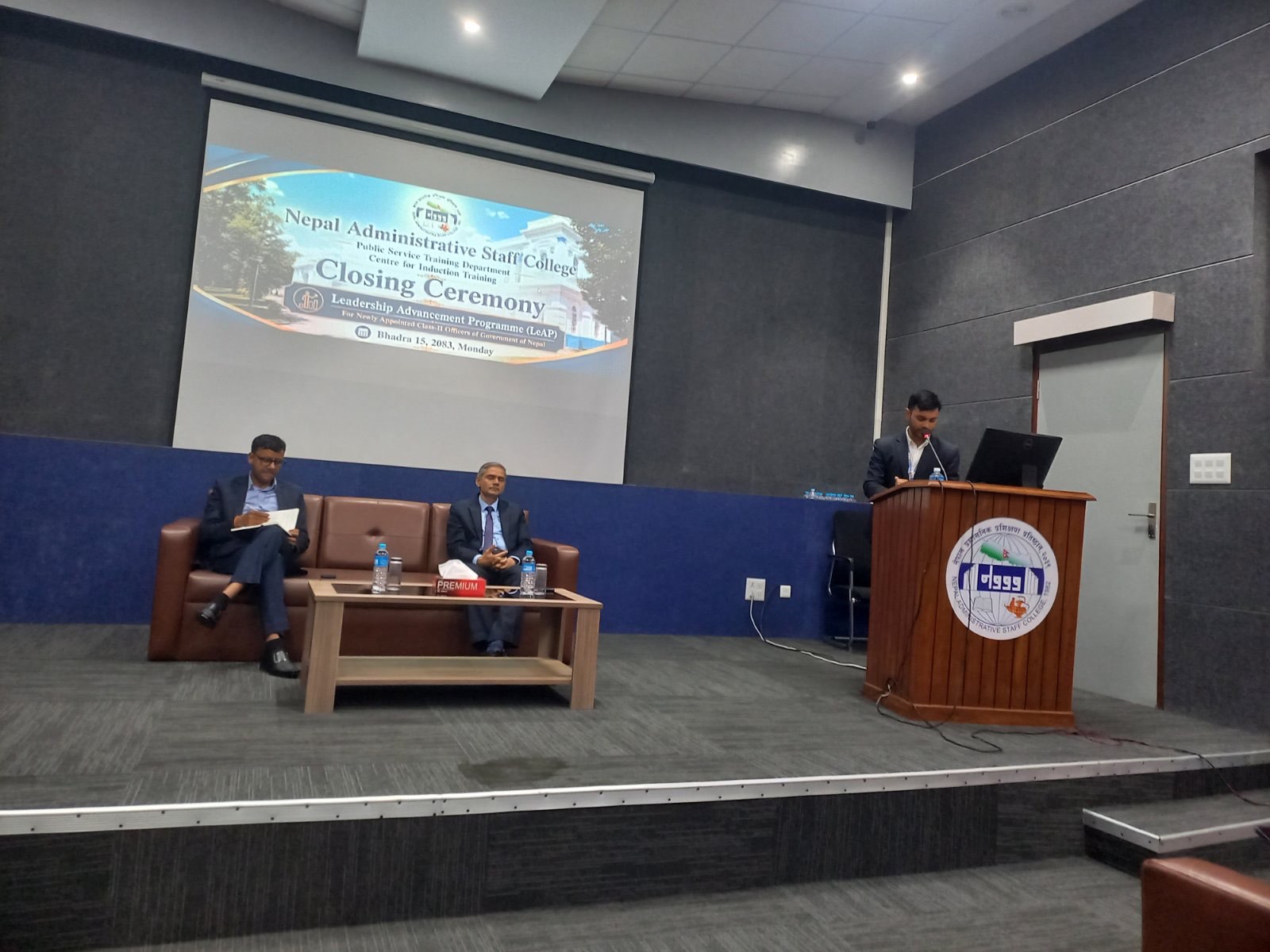
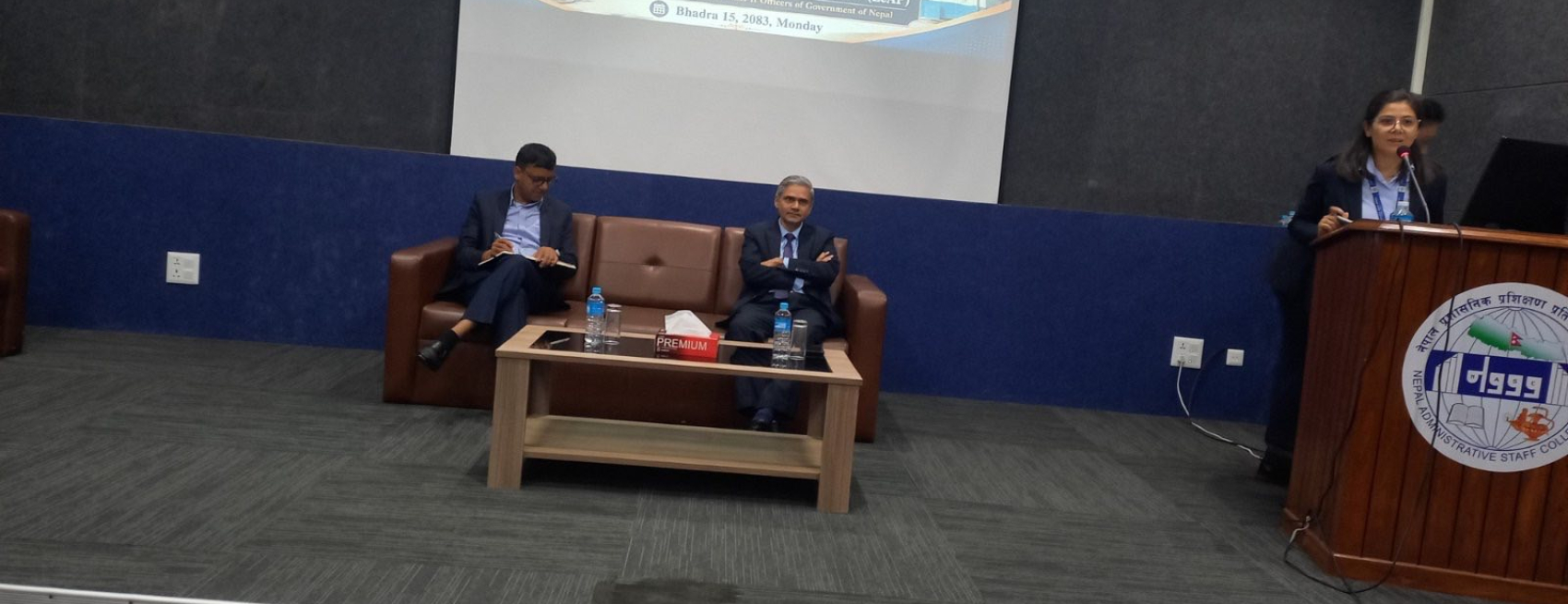
The Closing Ceremony of the Leadership Advancement Programme (LeAP) was held on Bhadra 15, 2083, at Kasthamandap Hall, NASC. The five-day programme brought together 44 participants from different service groups and focused on leadership, service innovation, public procurement, and contemporary issues in public service.
Speaking on behalf of the participants, Mr. Nabaraj Parajuli expressed gratitude to NASC, highlighting the programme’s practical learning, experience sharing, and the professional network developed among participants. He also offered suggestions for making future programmes more interactive and practice-oriented.
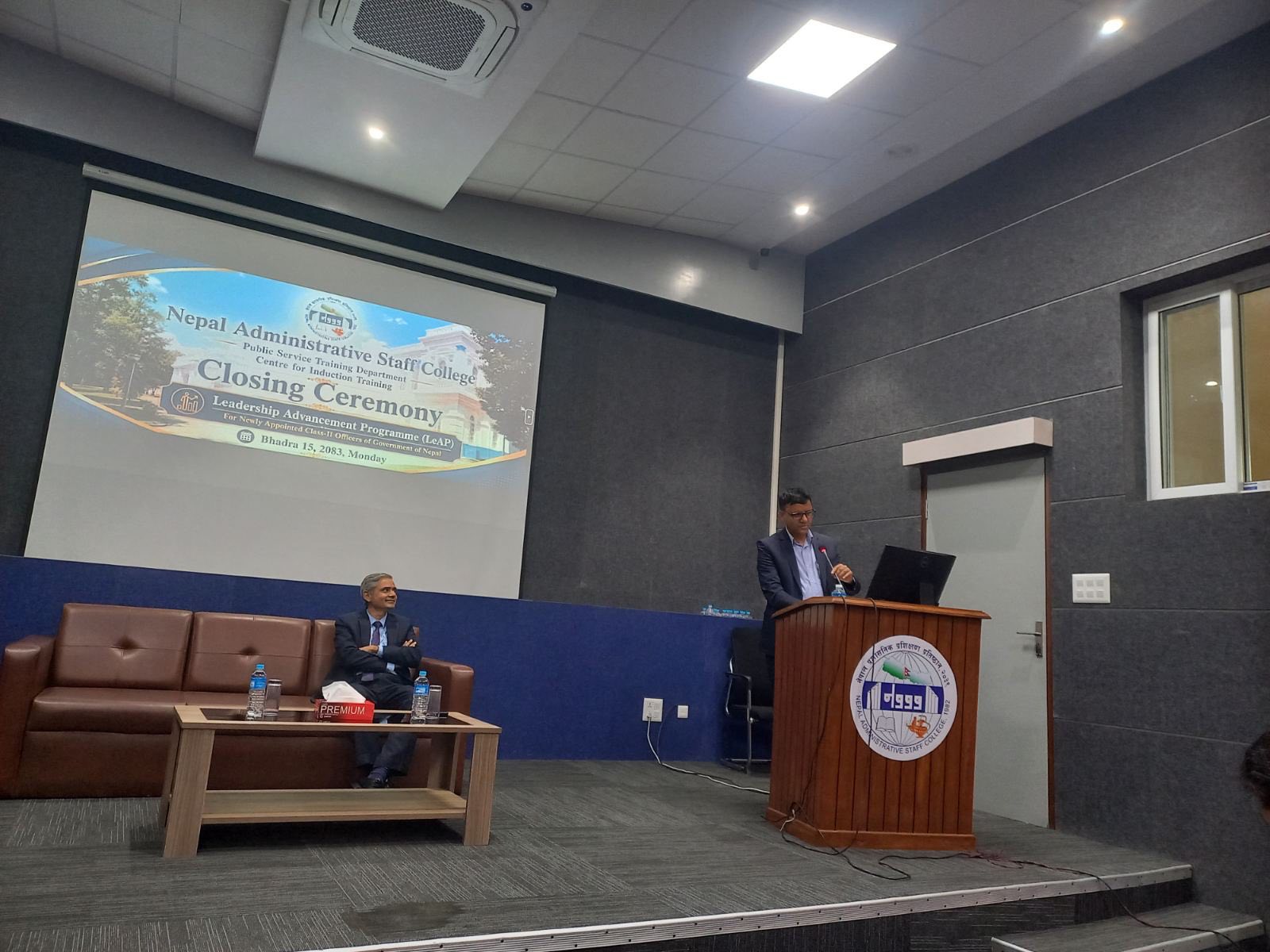
Mr. Trilochan Pokharel, Head of the Public Service Training Department, emphasized that the programme created more than a physical space for training; it created a shared space for ideas, experiences, and learning. He noted that with 44 participants sharing diverse professional experiences and perspectives, collective learning becomes far more valuable than individual learning. Reflecting on career advancement, he emphasized that promotion brings greater responsibility and a stronger obligation to lead effectively. He urged participants to transform their professional advancement into meaningful contributions and positive change in public service. He emphasized that participants should not be viewed merely as recipients of knowledge, but also as resource persons, whose practical experiences can enrich and expand the learning of others.
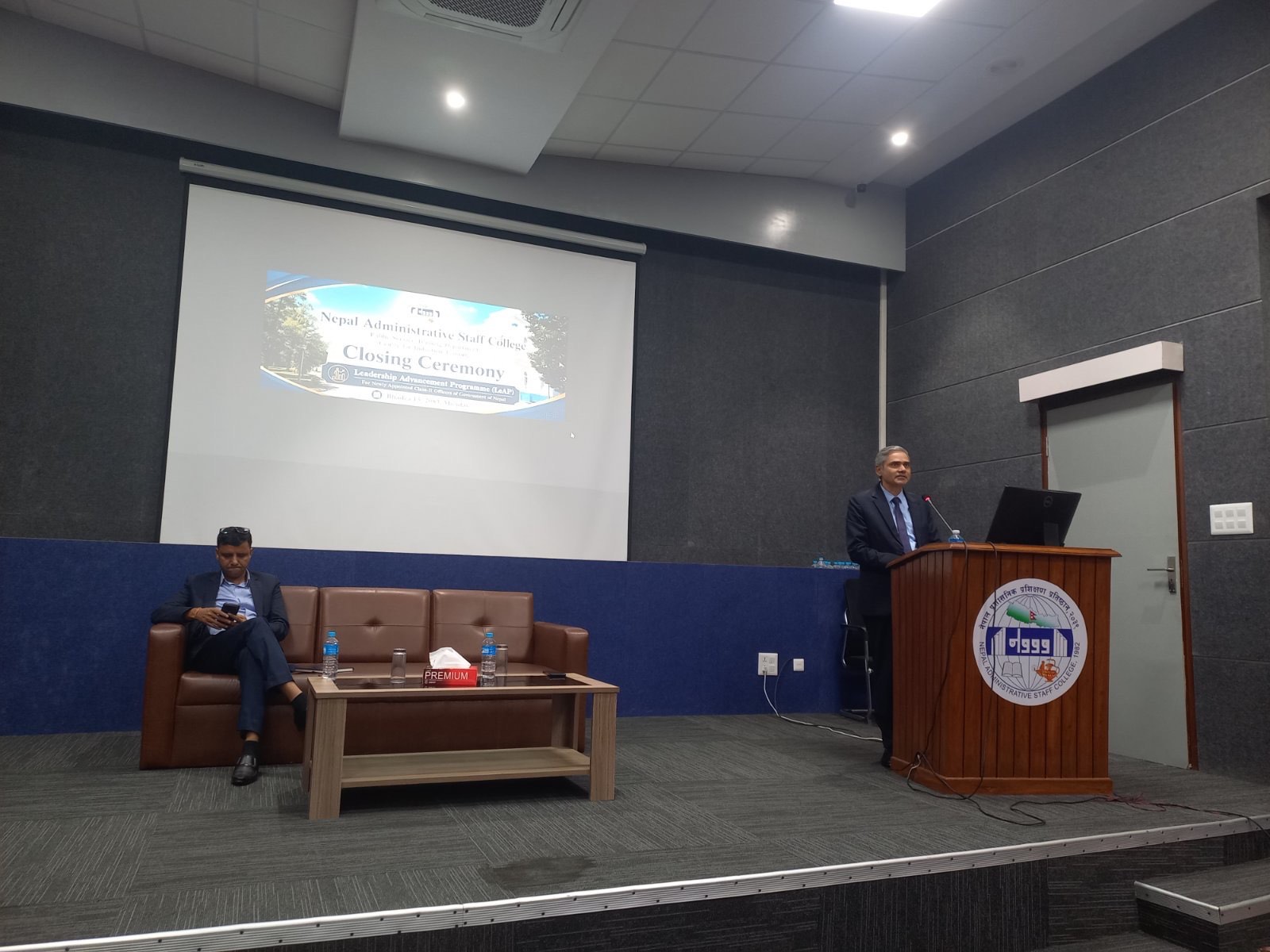
Certificates of completion were distributed to the participants by Officiating Executive Director Mr. Basanta Raj Sigdel prior to his address. Congratulating the participants, Mr. Sigdel appreciated the Centre for Induction Training (CIT) for successfully conducting the programme despite uncertainties. Reflecting on career progression, he compared it to a journey through hills and mountains, where each achievement brings new perspectives while opening the way to greater challenges and opportunities. He stressed that promotion is not simply moving upward in position, but an expansion of roles, responsibilities, experience, perspective, and leadership. He encouraged participants to use their growing responsibilities to take initiative, create positive change, and contribute meaningfully to public service.