


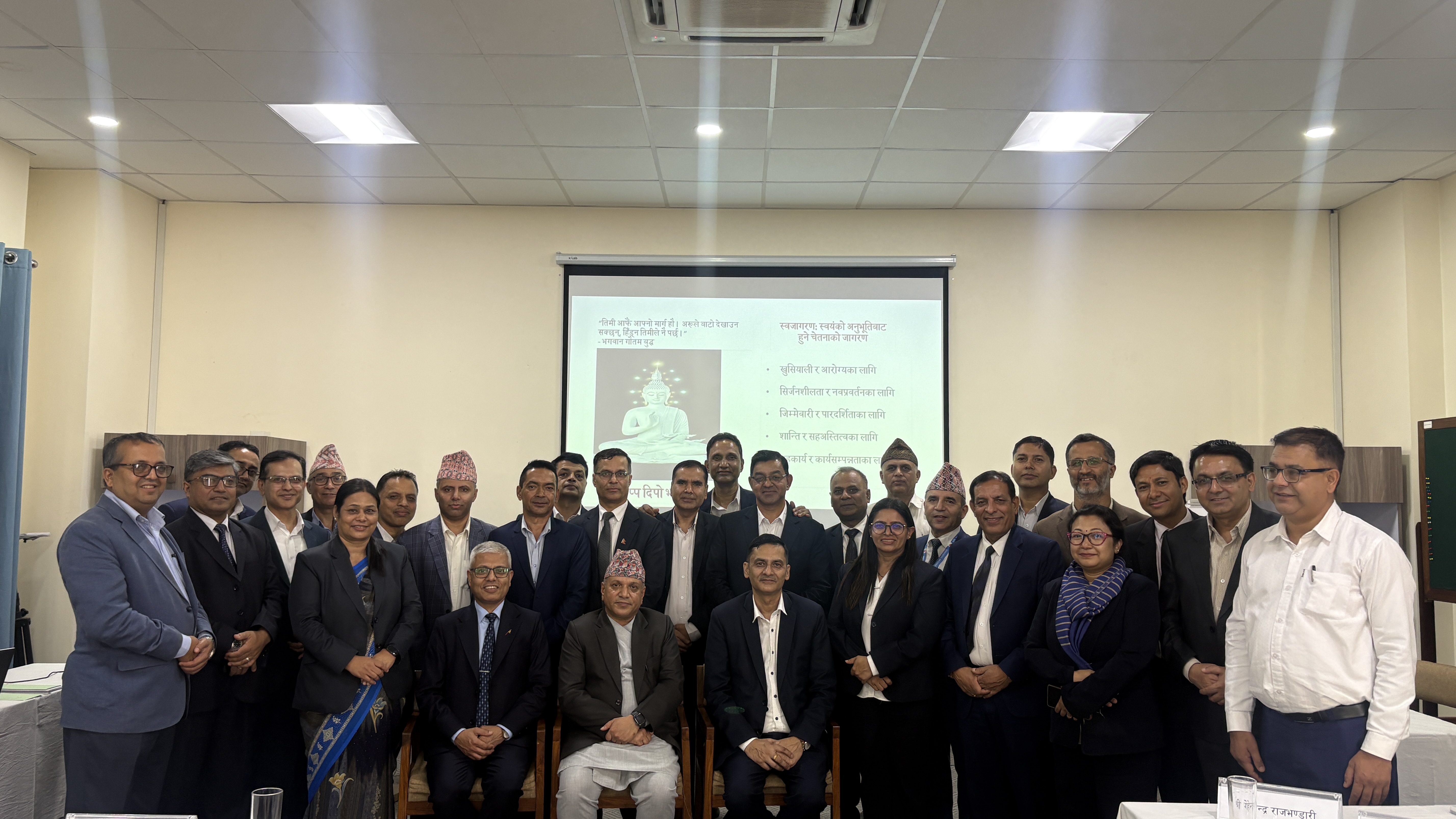
The Constitution of Nepal defines the State of Nepal as "an independent, indivisible, sovereign, secular, inclusive, democratic, socialism-oriented, and federal democratic republican state." Despite this foundational vision, Nepal continues to grapple with significant challenges such as poverty, youth unemployment, underdevelopment, and inefficiencies in resource management. To attain the ambitious goal of becoming a middle-income country by BS 2100, Nepal must commit to fostering a competent, performance oriented, and forward-looking public administration. The realization of these state features hinges on the nation's ability and accountability. Senior executives, as the pillars of public administration, are strategically positioned to spearhead this transformation. Their accountability towards social justice, judicious management of public resources, and enhanced performance will be instrumental in steering Nepal towards its BS 2100 aspirations.
The Senior Executive Development Programme (SEDP) is a cutting-edge leadership development program designed to equip senior executives of the Government of Nepal to lead public sector governance efficiently and effectively, as envisioned by the Constitution. This program instills qualities of fairness, competence, impartiality, freedom from corruption, accountability, and participation. The SEDP prepares Gazetted First-Class level (Joint Secretaries and equivalent) officers for higher-level and enhanced roles. The course is based on a core competency framework required across sectoral responsibilities. The core competencies for senior executives include a set of skills, attributes, and qualities essential for effectively leading and managing organizations and portfolios at the highest levels. These competencies are crucial for navigating the complex and dynamic governance and policy landscape, driving strategic initiatives, and achieving sustained progress.
The Constitution transformed Nepal into a federal state where state powers and responsibilities are shared among the federation, province, and local spheres. These spheres of government must adhere to the principles of "cooperation, co-existence, and coordination" while delivering their allocated constitutional competencies. The new governance arrangement has transformed both the architecture and functioning approaches of state agencies. Senior executives must play leading roles in managing the transition, institutionalizing constitutional provisions, and delivering commitments.
With advancements in artificial intelligence (AI) and global interconnectedness, public service is witnessing unprecedented opportunities in terms of efficiency, effectiveness, and responsiveness. We need to leverage the benefits of AI and apply innovative approaches to improve the quality of public services. As technical and intellectual advisors to political executives, senior executives must augment their ability and agility in policy processes, governance, and strategic thinking.
The SEDP is designed to impart practical, professional, and leadership skills to prepare senior executives to assume roles as senior leaders (special class) of public governance. The course provides a learning lab for participants, allowing them to benefit from substantial and diverse knowledge and professional experiences among themselves.
Competency Framework
The course is competency informed and structured into five modules. The modules are interconnected. They complement in a cumulative approach, providing multiple perspectives on the issues the senior executives have to manage in public governance. The course allows them a greater appreciation of the analytical tools and frameworks useful for solving problems in public governance.
Leadership
Strategic Thinking
Integrity
Policy Management
Course Aim & Outcomes
Enhancing the core competencies of the senior executives to develop them as transformational leaders and integrity builders with strategic thinking and policy management skills required to strengthen the governance system and improve public service delivery.
Course Modules
The course is structured into five modules. The modules are interconnected. They complement in a cumulative approach, providing multiple perspectives on the issues the senior executives have to manage in public governance. The course allows them a greater appreciation of the analytical tools and frameworks useful for solving problems in public governance.
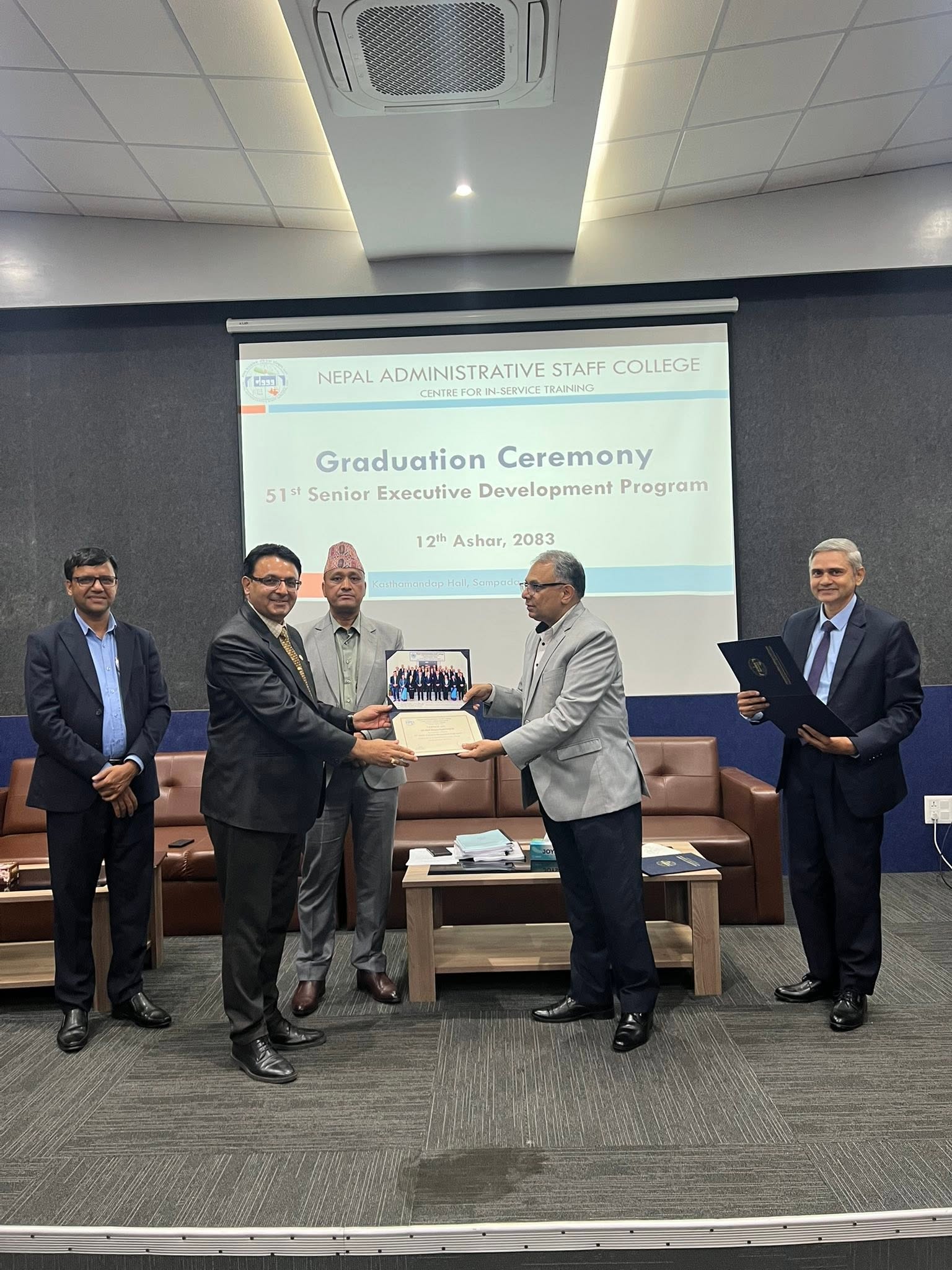
Evaluation
1. Participation and learning behaviour will be evaluated with respect to time, etiquette, contribution to learning sessions, problem-solving attitude, and
constructive discourse.
2. Action learning assignments of the modules will be evaluated considering
criteria such as clarity of improvement/ strategic issues, framing and
analysis of the problem, creativity and practicality of solutions or
strategies, and quality of action plan.
3. Verbal presentation of the assignment will be evaluated considering criteria
such as expression quality, contents and coverage in relation to time, use
of presentation aids, self-confidence and intellectual interpretation and
response to queries.
4. Participants are encouraged to attend all modules and activities. For any
unavoidable situation, participants will have a leverage of three days
during the total programme, not exceeding one day in a module. Failing
to maintain the attendance criteria will lead to the incompletion of the
respective module. Participants will have to complete the course within
three-years of enrollment.
5. The Programme Monitoring and Evaluation Committee (PMEC) will
prepare a merit list of participants based on the learning evaluation
system mentioned above and forward it to the Ministry of Federal Affairs
and General Administration.